

You know that moment when you see a ring that literally stops you in your tracks? That breathtaking sparkle that makes your heart skip a beat? Well, here’s something wild: that stunning piece might have been born in a lab instead of buried underground for millions of years. And honestly? It’s just as gorgeous.
Lab-grown diamond jewelry is shaking things up big time in the world of luxury accessories. We’re talking about real diamonds here, not cheap knockoffs or crystal pretenders. These babies have the exact same sparkle, hardness, and that jaw-dropping fire that makes diamonds so irresistible. The only difference? They come with a clean conscience and a much friendlier price tag.
Think about it this way: would you rather wear a stone that might have funded violence somewhere across the globe, or one that was crafted by brilliant scientists in a spotless facility? More and more people are choosing the latter, and frankly, it makes perfect sense. Lab-grown diamond jewelry gives you everything you love about diamonds without the moral hangover the next morning.
The crazy part is how these gems are fooling even seasoned jewelers. You’d need fancy equipment to tell them apart from the “real deal” (though they ARE real, just made differently). It’s like comparing twins raised in different households. Same DNA, same beauty, just different backstories.
What Exactly Goes into Making Lab-Grown Diamond Jewelry?
Picture a high-tech kitchen where instead of baking cookies, scientists are cooking up diamonds. That’s basically what happens in these incredible facilities where lab-grown diamond jewelry begins its journey.
There are two main recipes for creating synthetic diamonds, and both are pretty mind-blowing. The first method, called HPHT, basically recreates what happens deep inside the Earth. Scientists take a tiny diamond seed, surround it with pure carbon, then crank up the heat to over 2,000 degrees while applying crushing pressure. We’re talking about forces that would flatten your car like a pancake.
The second approach, CVD, works more like growing a crystal garden. Carbon-rich gases get broken down in a special chamber, and the carbon atoms slowly build up on a diamond seed, layer by layer. It’s like watching nature work in fast-forward, except with way more control over the final result.
Here’s what blows my mind: these synthetic diamonds often turn out cleaner and more perfect than the ones nature makes. Mother Nature is amazing, but she’s also a bit messy. All those earthquakes, volcanic eruptions, and geological chaos over millions of years? They leave marks. Lab conditions are pristine, so ethically sourced diamonds can actually grade higher than their underground cousins.
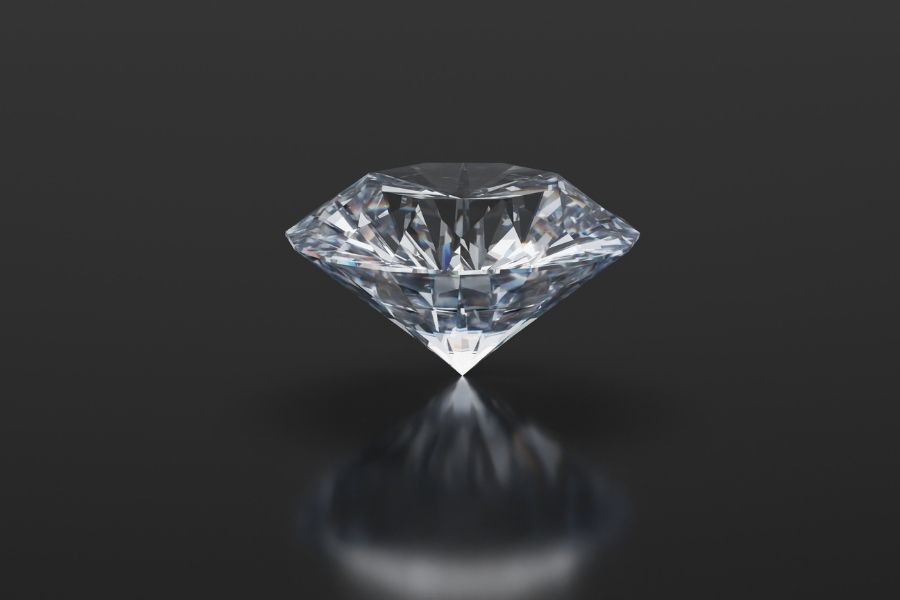
The Tech Behind These Sparkling Miracles
The machines that create lab-grown diamond jewelry are seriously impressive pieces of kit. We’re talking about equipment that costs more than most people’s houses and operates with precision that would make Swiss watchmakers jealous.
Those CVD reactors? They can grow multiple diamonds at once, each one developing its own personality based on tiny variations in temperature and pressure. It takes weeks for each stone to fully form, with computers monitoring every single parameter thousands of times per second. One degree off, and you might end up with a different color or clarity grade.
The HPHT presses are even more dramatic. These massive machines generate the same crushing forces you’d find at the Earth’s core. The engineering involved is honestly insane. They compress carbon around diamond seeds with such incredible precision that the results are virtually identical to stones that took millennia to form naturally.
Why Lab-Grown Diamond Jewelry Makes Ethical Sense
Let’s talk about the elephant in the room: blood diamonds. For decades, the traditional diamond trade has been tangled up with some seriously dark stuff. Wars funded by diamond sales, workers treated terribly, entire communities displaced for mining operations. It’s not a pretty picture.
Lab-grown diamond jewelry completely sidesteps this mess. When your diamond comes from a lab in North Carolina or Singapore instead of a questionable mine operation, you know exactly where it came from and who was involved in making it. No mystery, no moral gray areas, just clean origins you can feel good about.
The working conditions tell a completely different story too. Instead of dangerous mines with inadequate safety measures, synthetic diamonds are created in clean, regulated facilities where workers earn decent wages and go home safe every day. No child labor, no exploitation, just skilled technicians doing precision work in controlled environments.
What really gets me excited is the transparency. With ethically sourced diamonds, you can trace your stone’s entire journey. Lab creation, cutting, setting, the whole nine yards. Try doing that with a mined diamond that might have passed through a dozen different hands across three continents. Good luck with that detective work.
The Environmental Story That Actually Matters
Traditional diamond mining is basically an environmental nightmare. To get one measly carat, miners have to move nearly 2,000 tons of earth. Picture massive holes in the ground that you could fit entire neighborhoods into. Wildlife habitats destroyed, water systems disrupted, landscapes scarred for generations.
Lab-grown diamond jewelry production is refreshingly different. Yes, it uses electricity, but the overall footprint is way smaller. Many facilities are switching to renewable energy, making their carbon impact even tinier. Some companies are already running on 100% solar or wind power.
Water usage is another huge win. Diamond mines guzzle millions of gallons daily just to process ore and keep dust down. Synthetic diamond facilities use minimal water, mostly for cooling systems that recycle the same water over and over. In a world where water scarcity is becoming a real problem, that matters.
The Quality Question: Are Lab-Grown Diamonds Actually Good?
This is probably the biggest myth floating around about lab-grown diamond jewelry. Some people think these stones are somehow inferior, like they’re missing some magical natural essence. That’s complete nonsense.
Synthetic diamonds get graded using the exact same standards as mined stones. The Gemological Institute of America doesn’t give participation trophies. When they certify a lab-grown diamond as colorless and flawless, that stone is genuinely colorless and flawless. The grading process is identical, the standards are identical, the results speak for themselves.
The optical properties that make diamonds so captivating, that incredible sparkle and fire, are 100% identical between lab-grown and mined stones. They bend light the same way, create the same rainbow effects, and rank the same 10 on the hardness scale. Your ethically sourced diamonds will sparkle just as brilliantly in 50 years as they do today.
Even experienced jewelers can’t reliably tell the difference without specialized equipment. I’ve watched master gemologists examine lab-grown diamond jewelry and be completely stumped. The beauty is identical because the chemistry is identical.
Design Freedom Like Never Before Lab-Grown Diamond Jewelry
Here’s where things get really exciting for jewelry lovers. Synthetic diamonds have unleashed creativity in ways that weren’t possible before. Designers no longer have to work around whatever natural stones happen to be available in their size and quality range.
Need perfectly matched stones for an elaborate tennis bracelet? Lab-grown diamond jewelry makers can deliver exact specifications. Want a bold cocktail ring with a massive center stone that won’t require a second mortgage? Lab-grown makes it possible. The predictable supply and consistent quality open up design possibilities that were previously limited to the ultra-wealthy.
This freedom has led to some seriously stunning pieces. Statement necklaces with dozens of perfectly matched stones, intricate earrings with complex geometric patterns, rings that would have been impossible to create with the limitations of natural stone availability. Ethically sourced diamonds are pushing the boundaries of what’s possible in luxury jewelry design.
How the Market Is Embracing This Revolution
The numbers don’t lie: lab-grown diamond jewelry sales are exploding. Major retailers are dedicating serious floor space to these collections, and online sales are going through the roof. When Pandora announced they were going lab-grown only, it sent shockwaves through the industry.
Younger buyers are driving much of this growth. Millennials and Gen Z consumers aren’t just thinking about the bling factor. They want their purchases to align with their values. Synthetic diamonds check all their boxes: beautiful, ethical, environmentally responsible, and reasonably priced. It’s a no-brainer for many couples shopping for engagement rings.
Speaking of engagement rings, that’s where lab-grown diamond jewelry is really making waves. Couples can afford larger, higher-quality stones on typical budgets. Why settle for a tiny natural diamond when you can get a gorgeous lab-grown stone that’s twice the size and clearer? The symbolic meaning remains the same, but the value proposition is dramatically better.
Celebrity endorsements haven’t hurt either. When A-listers show up to red carpet events wearing ethically sourced diamonds, it sends a powerful message about acceptability and desirability. The stigma that once existed is rapidly disappearing.
