
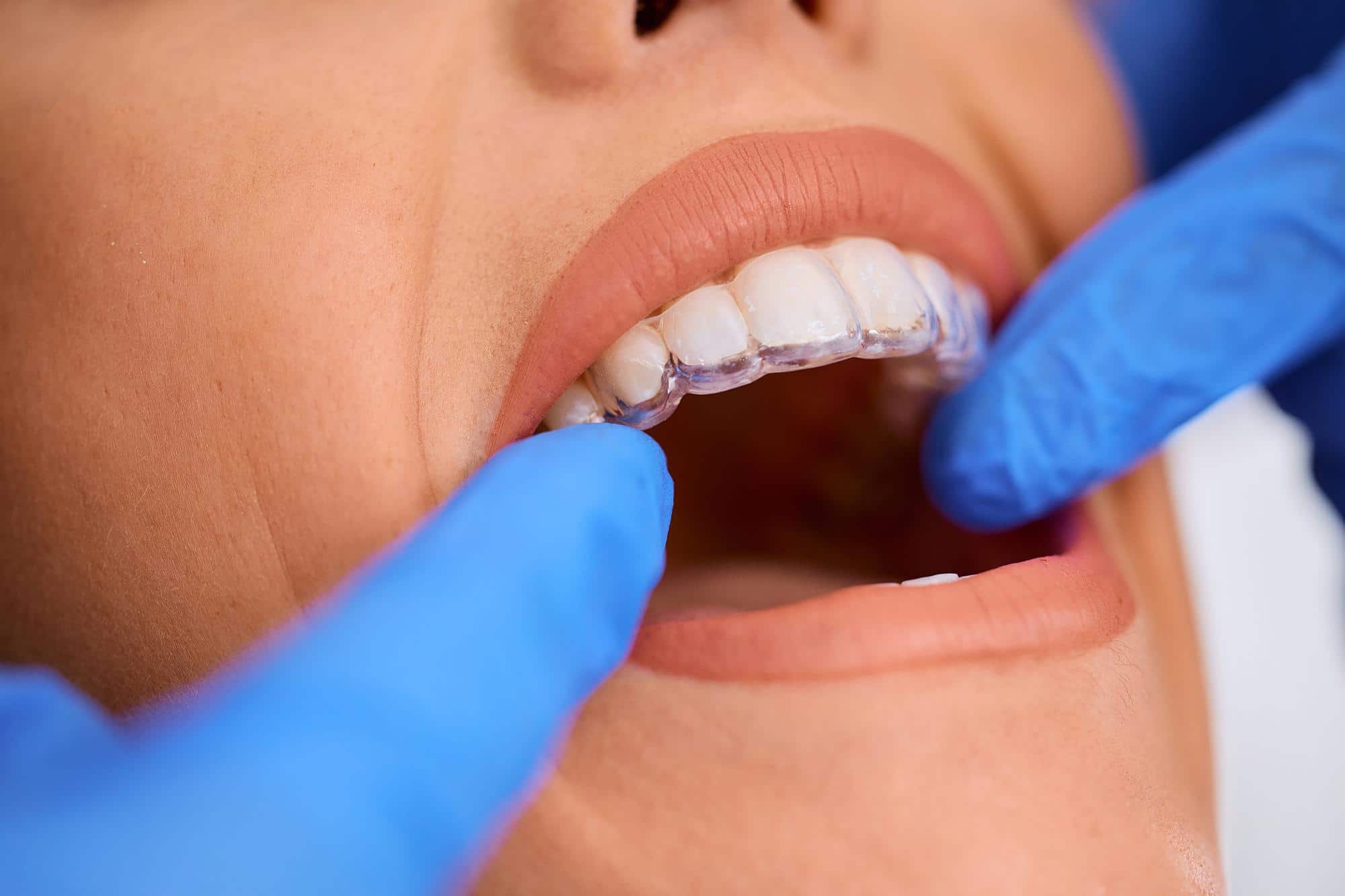
Among the orthodontic options available today, Invisalign Geneva has become one of the most frequently discussed approaches by adults and adolescents looking for a discreet way to realign their teeth. The system relies on a sequence of transparent, removable aligners designed individually for each patient, based on a digital plan that anticipates every step of the tooth movement. Its popularity is closely linked to three practical questions that patients almost always raise during their first consultation: how long does treatment last, how much does it cost, and what are the real advantages compared with other orthodontic options?
This article offers an informative overview of these three aspects. The figures and durations mentioned are general references drawn from clinical literature and public sources, not fixed values: each case is unique and must be assessed individually by an experienced practitioner. The aim is to help patients arrive at their consultation with a clearer understanding of what to expect from a modern aligner-based treatment.
How Invisalign Geneva works in practice
Invisalign Geneva is based on a series of clear plastic aligners, each worn for one to two weeks before being replaced by the next. Every tray applies controlled forces to specific teeth, producing gradual movement toward the planned final position. The aligners are removable, which means they can be taken out for meals, brushing, and special occasions, although the recommended wear time is around 20 to 22 hours per day.
The treatment begins with an intra-oral 3D scan, which replaces the traditional impression. The data are then processed through a planning software that generates a virtual simulation of the entire treatment, from the initial situation to the final outcome. Once the practitioner has reviewed and adjusted this plan, the aligners are manufactured and delivered in successive sets.
A clinical review published in the American Journal of Orthodontics and Dentofacial Orthopedics indicates that clear aligners can effectively treat a wide range of mild to moderate malocclusions, particularly when patient compliance is high and the case is carefully selected. Complex skeletal discrepancies, on the other hand, may still require fixed appliances or a combined orthodontic-surgical approach.
How long does Invisalign Geneva usually take
Duration is the question patients ask most often. The honest answer is that it depends on several variables: the complexity of the case, the type of movements required, the discipline with which the patient wears the aligners, and the biological response of the supporting tissues. As a general reference, mild cases can be completed in approximately 6 to 9 months, moderate cases in 12 to 18 months, and more complex situations may extend beyond 24 months.
Several factors typically influence the total duration:
- the severity of crowding, spacing or rotations to correct;
- the type and number of movements involved (tipping, translation, intrusion, extrusion);
- the wear time respected by the patient each day;
- the need for additional refinement sets at the end of the main sequence;
- the use of auxiliary elements such as attachments or interproximal reduction.
Refinements are a normal part of the protocol. After the initial series of aligners, a new scan is taken to check whether all planned movements have been achieved. If small adjustments remain, an additional set of trays is produced. This step is built into the treatment philosophy and should not be interpreted as a failure of the original plan.
How much does Invisalign Geneva cost
Cost is the second recurring question, and again the answer is rarely a single number. The price of Invisalign Geneva depends on the complexity of the case, the number of aligners required, the duration of the treatment, the inclusion of complementary procedures such as professional cleaning or whitening, and the experience of the clinical team. In Switzerland, published sources generally place the total cost of a complete aligner treatment in a broad range, typically between several thousand and over ten thousand Swiss francs.
The final amount usually reflects several components:
- the initial diagnostic phase, including 3D scans, photographs and radiographs;
- the design and laboratory production of the aligners;
- the clinical appointments throughout treatment;
- any refinement sets needed at the end of the main sequence;
- the retention phase with retainers after active treatment.
It is important to compare quotes carefully and to look beyond the headline price. A complete estimate should clearly indicate what is included, how refinements are handled, and what the cost would be in case of unexpected events such as a lost aligner. Transparent communication on these points is a marker of good clinical practice. Patients are also encouraged to check whether their complementary health insurance covers part of the treatment, particularly in the case of adolescents.
The main benefits compared with traditional braces
The clinical literature highlights several practical advantages of clear aligners over traditional fixed appliances, especially in cases of mild to moderate complexity. While metal or ceramic brackets remain the reference for certain complex movements, aligners have demonstrated specific strengths that explain the growing demand among adult patients.
Comparative studies published in Progress in Orthodontics and other peer-reviewed journals report that patients treated with clear aligners experience less initial pain, fewer soft tissue irritations, and better oral hygiene throughout treatment compared with patients wearing fixed appliances. These findings are particularly relevant for adults who must combine treatment with professional and social commitments.
Among the most commonly cited benefits of Invisalign Geneva:
- a discreet appearance that suits professional and public-facing roles;
- the possibility of removing the aligners for meals, brushing and special occasions;
- better access for daily oral hygiene compared with fixed brackets;
- fewer emergencies linked to broken brackets or detached wires;
- a digital preview of the final outcome before treatment begins.
These advantages, however, depend strongly on patient compliance. Aligners only work when they are actually worn for the recommended number of hours. This shared responsibility between practitioner and patient is one of the defining features of aligner-based treatment.
Indications, limits and realistic expectations
Despite their versatility, clear aligners are not the right answer for every situation. Cases involving severe skeletal discrepancies, extensive extractions, or very complex movements may still benefit from fixed appliances or, in selected situations, from a combined surgical and orthodontic approach. A thorough diagnostic evaluation is the only reliable way to determine whether Invisalign Geneva is the most appropriate option.
Realistic expectations are essential. Aligners shape the position of the teeth, but they do not modify the underlying bone structure of the face. Patients are encouraged to discuss openly with the practitioner what can be achieved, what the limits are, and what alternative options would deliver a comparable or better result in their specific situation. Transparency at this stage helps avoid disappointment later.
Choosing the right clinical setting in Geneva
The success of an aligner-based treatment relies on three pillars: an accurate diagnosis, a personalized plan, and consistent follow-up throughout the months of active treatment. Patients are generally advised to compare several proposals, to ask detailed questions about the planning protocol, the management of refinements, and the retention strategy, and to choose a clinical team they feel comfortable working with over the long term.
An overview of the orthodontic and aesthetic solutions available locally can be consulted, for example, on the treatment page of Geneva Smile Center, a Geneva-based clinic specialized in advanced dental care, where invisible aligners are presented within a broader range of contemporary orthodontic and aesthetic options. Comparing different approaches helps the patient understand which solution best matches the diagnosis and personal expectations.
Where to find reliable evidence on aligner treatments
Patients who want to deepen their understanding of aligner-based orthodontics can rely on independent, peer-reviewed sources rather than promotional content. Systematic reviews published by the Cochrane Library in its section dedicated to dentistry and oral health offer rigorous summaries of the available clinical evidence on orthodontic appliances, retention protocols, and the long-term stability of results. Consulting such resources is a useful way to prepare more precise questions for the consultation and to better understand the rationale behind the proposed treatment plan.
Life after active treatment: the retention phase
Many patients underestimate the importance of the retention phase that follows active treatment. Once the teeth have been moved into their new position, the surrounding bone and ligaments need time to stabilize. Without a proper retention strategy, teeth tend to drift back toward their original alignment over months or years. This phenomenon is well documented and applies to every type of orthodontic treatment, including aligners.
Retention typically involves a combination of removable retainers worn at night and, in some cases, a thin wire bonded behind the front teeth. The practitioner defines the most appropriate protocol based on the type of movements performed and the individual risk of relapse. Asking about the retention plan from the beginning of the consultation is part of an informed decision.
A modern option, with informed expectations
Invisalign Geneva represents one of the most refined non-surgical solutions available today for adults and adolescents who wish to realign their teeth discreetly. Its main strengths lie in the aesthetic discretion of the aligners, the comfort during everyday life, and the predictability offered by digital planning. Its main requirements are patient discipline and a careful diagnostic phase to confirm that the indication is appropriate.
Approached with realistic expectations, accurate clinical information, and a clear understanding of duration, cost, and retention, this type of treatment can offer a balanced result that supports both aesthetics and long-term oral health. As always in orthodontics, the decisive factor is not the brand of the appliance, but the quality of the diagnosis and the relationship of trust established with the clinical team.
