

You know that feeling when you walk into a forest and suddenly your shoulders drop? That’s what happens when I step into my friend Sarah’s kitchen. No joke – she’s got herbs climbing up one wall, sunlight pouring through these massive windows, and the whole place just feels alive. That’s biophilic kitchen design in action. It’s not some fancy decorator term – it’s about making your kitchen feel less like a sterile laboratory and more like a place where nature actually belongs. Because let’s be honest, most of us are stuck indoors way too much, and our kitchens shouldn’t feel like another concrete box.
Here’s the thing: your kitchen is where you start your day, where you wind down at night, where kids do homework while you’re chopping vegetables. Why wouldn’t you want it to feel like a breath of fresh air? Biophilic design isn’t just about throwing a few plants around (though that helps). It’s about creating a space that makes you feel genuinely good to be in.
Why Your Kitchen Desperately Needs More Nature Biophilic Kitchen Design
Look, I get it. You’re probably thinking “Great, another design trend that’ll be passé in two years.” But this isn’t about trends. This is about basic human biology.
We’re wired to crave nature. Scientists have a fancy name for it – biophilia – but you don’t need a PhD to know that you feel better outside than under fluorescent lights. The problem is, most of us spend 90% of our time indoors, and our kitchens often feel like the most artificial spaces in our homes.
Biophilic kitchen design fixes that disconnect. Studies show that people in nature-connected spaces have lower stress levels, sleep better, and even digest food more easily. Makes sense, right? When you’re relaxed, your body actually works better.
I started paying attention to this after visiting my cousin’s place in Portland. She’d gutted her kitchen and rebuilt it with reclaimed wood, living walls, and windows that made you forget you were in the city. I spent three days there and honestly felt more rested than I had in months. That’s when I realized – this isn’t just about looking good. It’s about feeling good.
Getting More Light (Without Knocking Down Walls)
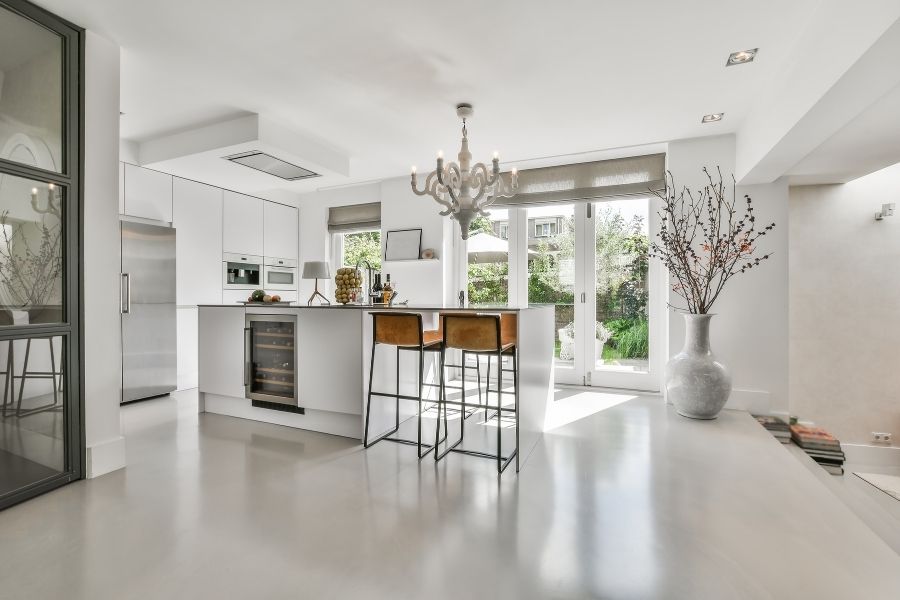
Natural light is everything in a biophilic kitchen. But here’s what nobody tells you: you don’t need to tear your house apart to get it.
Skylights are amazing if you can swing them. My neighbor installed one last year and now her kitchen feels like a greenhouse. But if that’s not in the budget, try light tubes. They’re basically mirrors that channel sunlight from your roof down into your kitchen. Way cheaper than skylights and they work surprisingly well.
Got a window? Make it bigger. I know, I know – easier said than done. But even expanding an existing window can flood your space with light. My brother did this and it completely changed how his kitchen feels. He went from flipping the lights on at 3 PM to cooking dinner by natural light.
If you’re stuck with what you’ve got, get strategic about window treatments. Ditch the heavy curtains for something that lets light through. Frosted glass gives you privacy without blocking the good stuff. And mirrors? They’re magic. Put one across from your window and watch your natural light double.
Plants That Actually Thrive in Biophilic Kitchen Design
Let’s talk about the elephant in the room – most of us kill plants. But kitchens are actually great for plants if you pick the right ones.
Herbs are foolproof. Seriously. Basil, mint, parsley – they love kitchen windows and you’ll actually use them. I’ve got a little herb garden on my windowsill that saves me probably $20 a month in grocery store herbs. Plus, there’s something satisfying about snipping fresh basil for your pasta sauce.
Pothos are basically indestructible. They’ll grow in water, they’ll grow in soil, they’ll even grow if you forget about them for two weeks. And they clean your air while they’re at it. Win-win.
Want to go bigger? Snake plants are perfect for corners that don’t get much light. They’re tall, architectural, and they literally purify the air while you sleep. NASA says they’re one of the best air-cleaning plants you can get.
Here’s a pro tip: start small. Get one plant, keep it alive, then add another. Building a biophilic kitchen is like learning to cook – you don’t start with a five-course meal.
Materials That Feel Like Nature (Without Breaking the Bank)
You don’t need marble countertops to create a nature-inspired kitchen. Some of the best biophilic materials are actually the most affordable.
Reclaimed wood is where it’s at. It’s cheaper than new wood, it’s got character, and every piece tells a story. I found mine at a local salvage yard for half the price of new lumber. The guy there told me it came from an old barn in Vermont. Now every time I prep vegetables, I’m touching a piece of history.
Bamboo is another winner. It grows ridiculously fast, it’s naturally antibacterial, and it looks great. My cutting boards are all bamboo – they’re easier on my knives and they’ve held up for years.
Stone doesn’t have to be expensive either. Soapstone costs way less than granite and it’s actually better for kitchens. It’s heat-resistant, it doesn’t stain, and it gets more beautiful with age. My friend has soapstone counters that are 15 years old and they look better now than when she installed them.
Water Features That Won’t Drive You Crazy Biophilic Kitchen Design
I was skeptical about water in kitchens until I experienced it. My aunt has this tiny fountain on her counter – just a small ceramic thing with a little pump. The sound is barely noticeable, but somehow it makes the whole space feel calmer.
You don’t need a waterfall. A small tabletop fountain costs maybe $30 and you can move it around until you find the perfect spot. The trick is finding one that’s subtle – you want the sound of water, not the sound of a fish tank.
If you’re handy, you can build a water wall into your backsplash. I’ve seen some gorgeous ones that look like modern art but create this amazing ambient sound. Just make sure you’ve got good ventilation – you don’t want humidity issues.
Making It Work in Real Life
Here’s the truth about biophilic kitchen design: it has to work with your actual life. I don’t care how beautiful your living wall is if you can’t reach the spice rack behind it.
Start with one area. Maybe it’s your windowsill. Get some herbs growing there. Or maybe it’s your lighting – swap out those harsh bulbs for something warmer. Small changes add up.
Seasonal rotation keeps things interesting. I change my plants with the seasons – succulents in summer, evergreens in winter. It’s like redecorating without spending money.
And maintenance? It’s honestly not that bad if you’re smart about it. Self-watering planters exist for a reason. Timer-controlled grow lights mean your herbs stay happy even in winter. Technology can actually make biophilic design easier, not harder.
The Real Benefits (Beyond Just Looking Good) Biophilic Kitchen Design
I sleep better since I redid my kitchen with biophilic principles. Sounds weird, but it’s true. My kitchen connects to my bedroom, and having all those plants and natural materials creates this calm environment that carries through the whole house.
My kids hang out in the kitchen more now. They actually help with cooking because the space feels welcoming instead of sterile. My teenage daughter does homework at the kitchen island because she says it feels more peaceful than her room.
And cooking? It’s genuinely more enjoyable. When you’re surrounded by living things and natural light, chopping vegetables becomes almost meditative. I find myself cooking more from scratch because I actually want to spend time in the space.
Getting Started Without Going Broke
You don’t need to gut your kitchen to embrace biophilic design. Here’s what actually works:
Get some plants. Seriously, just start there. A few herbs, maybe a snake plant. See how it feels.
Improve your lighting. Change your bulbs to something warmer. If you can, add a lamp with a natural wood base.
Add natural textures. A bamboo cutting board, a jute rug, some wooden serving bowls. These small touches make a huge difference.
Think about your window situation. Can you lose the heavy curtains? Can you clean your windows to let in more light? Sometimes the simplest changes have the biggest impact.
What’s Next for Biophilic Kitchens
Smart technology is making biophilic design easier. Self-monitoring plant systems, automated lighting that follows natural rhythms, even windows that adjust their tint based on the sun’s position. The future is going to make it even easier to live with nature indoors.
But honestly? The best biophilic kitchen is the one you’ll actually use and enjoy. It doesn’t have to be perfect. It doesn’t have to look like a magazine. It just has to make you feel good.
So what’s stopping you? Maybe it’s time to bring a little nature indoors and see what happens. Trust me, your morning coffee routine will never be the same.
